
Living off-grid isn’t just a hobby, it’s a lifestyle choice—it’s a long-term commitment to independence, resilience, and a different way of thinking about energy. For those of you who watch Ashtabula Hobby Talk, you already know that my hobby farm runs entirely on solar power. We raise sheep, heat and cook with wood, and for the past eight years, we’ve built a system that lets us live comfortably without relying on the electrical grid.
Over time, we’ve experienced just about everything that comes with off-grid solar living and hobby farming. There are the predictable challenges, like brushing snow off the panels in the middle of winter or carefully planning system expansions as we add more devices to the homestead. But the truth is, most days feel no different than living in a conventional home. With the exception of one stretch a few years ago—fifteen straight days without sun—we rarely think about power limitations.
One of the biggest advantages of off-grid solar is reliability during outages. When storms roll through and knock out power lines across the region, we typically don’t even notice. Our lights stay on, our systems keep running, and life goes on uninterrupted. That independence is one of the main reasons I wouldn’t ever go back to grid power.
This past weekend, though, was a reminder that an off=grid hobby farm with solar power comes with their own unique vulnerabilities.
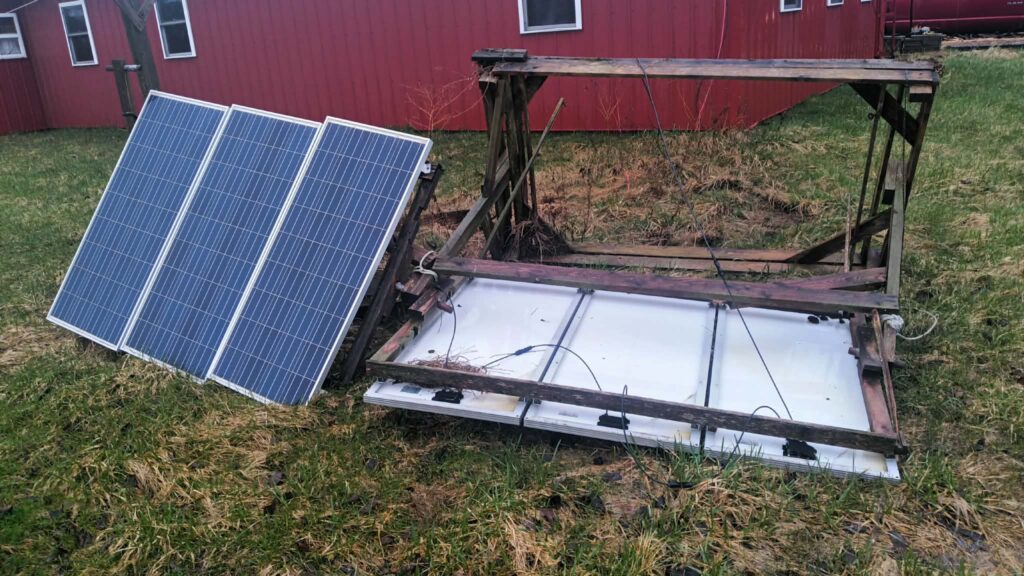
A windstorm moved through Sunday, bringing gusts exceeding 60 miles per hour. Around here, that’s not unusual. We see storms like that a few times a year, sometimes worse. For eight years, our solar setup handled everything nature threw at it without issue. But sometime overnight, that streak ended.
I woke up Monday morning to find our solar panels on the ground.
At first glance, it looked worse than it actually was. The panels themselves appeared intact, which was a huge relief. The real damage was to the mounting structure. Our original frame was built more like a raised garden bed than a permanent installation. It sat on the ground rather than being anchored into it, held in place by ropes attached to auger stakes. The structure was made mostly from rough-cut lumber—heavy and sturdy when it was new—but after eight years of exposure to the elements, the wood had started to weaken and rot.
My best guess is that one of the original ropes finally gave out. With winds that strong, it wouldn’t have taken much. Once the structure lost tension on one side, the panels essentially turned into sails, catching the wind and pulling the whole system down.
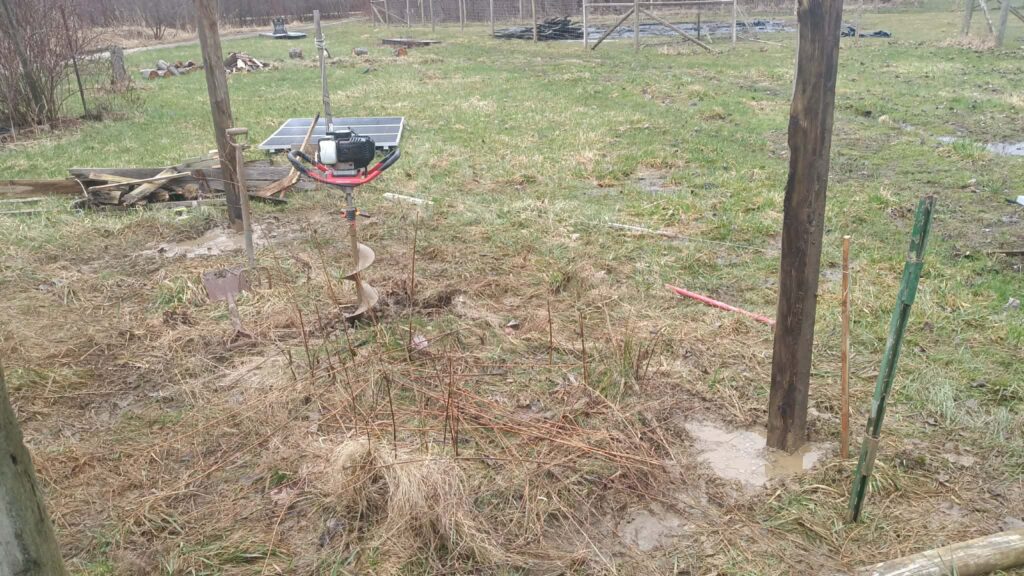
Monday was spent cleaning up the mess and reassessing the situation. Instead of trying to patch the old design, I decided to move forward with something I had already been planning for later this year: a more permanent, ground-mounted solution. Andrew (our line producer for Ashtabula Hobby Talk and good friend) came over to help. He and I set new posts into the ground to create a stronger foundation—something built to handle both time and weather more effectively.
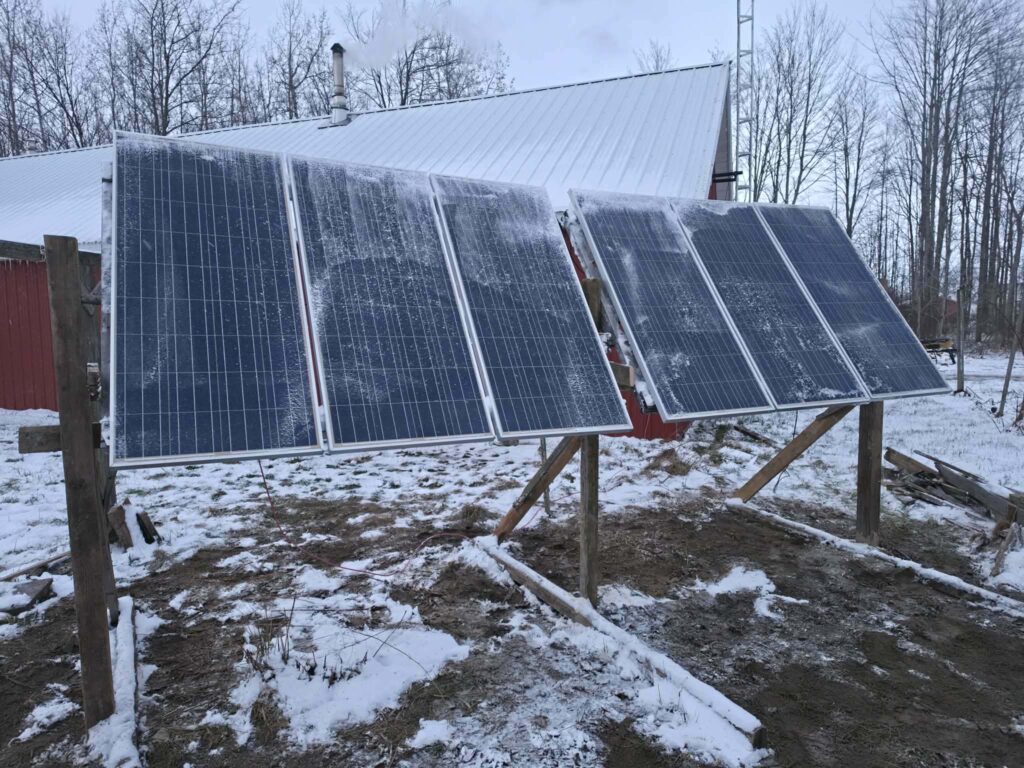
By Tuesday after work we got the panels back up and mounted on the new structure. What was supposed to be a summer upgrade turned into an immediate rebuild, but in a way, it’s better to get it done now rather than risk another failure down the line.
One of the best parts of the whole experience is that we never actually lost power. When the panels went down Sunday night, our battery bank was sitting at about 75 percent. We went through Monday more or less as usual, just being mindful of larger loads like laundry. By Tuesday night, before installing the panels, we were still at 65 percent. That would have given us a few more days of normal use before needing to seriously conserve energy.
That’s the part of off-grid solar that often gets overlooked. It’s not just about generating power—it’s about storing it and managing it wisely. A well-designed battery system gives you a buffer, and that buffer can make all the difference when something unexpected happens. I can’t say mine is “well designed” but it works.
This experience was a good reminder that while off-grid living offers independence, it also requires constant awareness and adaptation. Systems age, materials wear out, and nature always has the final say. But it also reinforced why we chose this path in the first place. Even with panels on the ground, we still had power. We still had control.
And now, with a stronger mounting system in place, we’re better prepared for whatever the next storm brings…. And yes more upgrades are planned.
I think I gained Hobby Points this week.